
-
 The accidental result of a collaboration by Margaret A. Harrell and Jef Crab, Stop All the Clocks was conceived when Jef commented about Harrell’s An Underground PRINCIPIA: “My biggest concern is that I have no idea how many people will be able to grasp the depth of the principles you describe. It is amazing enough that you take a lifetime of experiences and connect them into a driving force that leads to the realization of one’s purpose. Even more amazing is that you include the most subtle levels of existence that play a role in these processes . . . Most breathtakingly, by reading An Underground PRINCIPIA, the reader can gain the insight that all of this is happening, not in one lifetime, whether human or universal, but in an eternal now. Amazing achievement.”—Jef Crab, An Underground PRINCIPIA review Why not make that depth accessible? Tell even more stories? Do it in conversations? Reveal tales that neither even knew about the other? Harrell pondered. Why not take the obstacle as a Giant Opportunity? And so this new book was born in conversations on Skype. Miraculously, they needed little editing and fitted neatly into Stop All the Clocks, which Harrell had started writing. Jef stepped in and the conversations that followed sparkled with probing wisdom, as the two simplified ideas, telling of experiences, helping bring about what Jef called a crashing down of the old paradigm.
 -
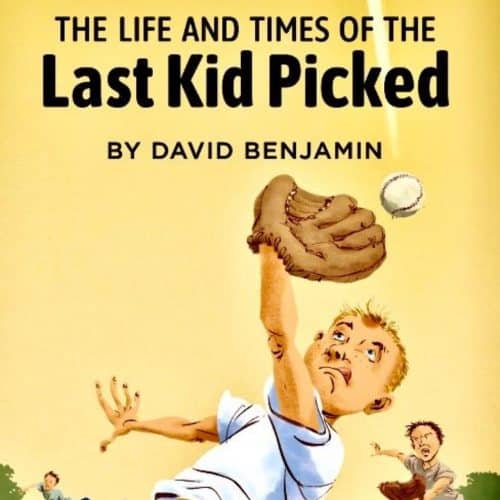 David Benjamin pays homage to the exuberance of countless untamed boys who grew up in Middle America at mid-century. Whether he’s stalking snakes in the bogs of Wisconsin, playing four-kid baseball with his bothersome little brother and two favorite cousins, leaping garbage cans for a beautiful little redheaded girl, or joining Chucky Dutcher for a movie marathon at the Erwin Theater, Benjamin is the kind of precocious ironist who would have found a sidekick in Huck Finn. His tales and insights lyrically capture a precious moment in bygone American life, as Benjamin recalls the myriad scrapes, reckless escapades and wanderlust that once made childhood an exhilarating — or terrifying — adventure.
 -
 "Two-Pound Baby Wins Life Fight" Imbalanced traces Sheri Thomas' remarkable journey from a front-page headline in 1962 to her current role as an advocate fighting to remove the stigmas surrounding physical disabilities and mental health. Unflinching, poignant and humorous, Imbalanced is her personal account of juggling lifelong challenges-including cerebral palsy, migraines and brain surgery-with a successful career before unexpectedly facing serious mental health crises in her fifties.
 -

Sir Isaac Newton famously complained about “action at a distance.” How was it possible, he wrote, that gravity, or attraction, operated between objects without physical contact? Well, jump to the twenty-first century, and we have a lot more to say about that. Readers will enjoy a brilliant, outrageous, playful exploration of quantum physics in everyday life, from a secret interplay of TV plots with us, in electricity, to other speculations, founded in the author’s decades of initiations as well as being an original thinker and a scholar.
An unusual feature of the illustrations in AN UNDERGROUND PRINCIPIA is a technique called “computer-PK,” or mind through matter in the creation of printouts that refocus the text on-screen in the printing so that nothing happens twice. As in Einstein’s “Credo,” the author exemplifies: “The most beautiful and deepest experience [one] can have is the sense of the mysterious.”Even more amazing is that you include the most subtle levels of existence that play a role in these processes. An Underground PRINCIPIA connects life purpose, spirituality, depth psychology, and quantum physics into one all-encompassing movement.
-
 A memoir of Fred Mollin's life in music.
 -
 What does it take to overcome deeply embedded family traumas, career-ending betrayals, and failed relationships? What is the personal cost of keeping secrets—and staying in the closet? These are questions that Mary Means explores in her memoir, as she navigates growing up as a young closeted lesbian in Georgia during the 1960s and learning to love—and be loved—as an adult. Through the deaths of loved ones, the fear of discovery, and the budding of a legacy that would come to change lives across the nation, Something Worth Saving tells a story of resilience and self-discovery perfect for anyone who has ever struggled to maintain a flawless facade when inside they were crumbling. Mary Means is an award-winning leader, founder of the Main Street revitalization movement that has brought vitality back to countless town centers. Her candor and vulnerability permeate her remarkable story.
 -
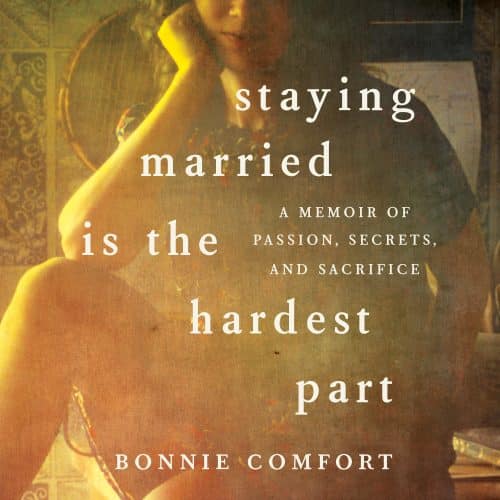 2025 IPPY Awards Silver Medalist for Sexuality/Relationships 2025 ZIBBY Most Anticipated Book of 2025 2025 ZIBBY Summer Reads Selection Can a loving relationship endure career setbacks, infidelities, and mismatched sexual desires? This is the question psychologist Bonnie Comfort grapples with as she navigates her unpredictable thirty-year marriage to Hollywood screenwriter Bob, while she provides marital therapy to others. Bob is affectionate, brilliant, and hilarious—but his sexual desires are incompatible with Bonnie’s. Despite her misgivings, she indulges his kinks, which often included photographing her in lingerie. Their Hollywood life is exciting, but eventually Bob’s growing career frustrations lead to his complete sexual shutdown. Tensions rise, and Bob suggests Bonnie have discreet affairs and not tell him. She does just that—but when she confesses her infidelities five years later, his sexual demands become more extreme. When she complies, Bonnie feels shame; when she refuses, as she increasingly does, their fights threaten to tear their marriage apart. Bonnie understands the rhythm of disconnection and repair that is common in love relationships. As we follow the journey of her own life, she shares with the reader the nature of intimacy, distance and expectations placed on long-term love. With honesty and vulnerability, she recounts the passionate highs and lows of her own marriage which sadly ends with Bob’s death. As she grieves, Bonnie reflects on her role in their marital struggles and offers profound insights about marriage from her personal and professional experience. Her story lays bare the complexities of love, the ongoing challenges women face in intimate relationships, and how even difficult marriages can find a way to thrive.
 -
Sale!

Memoir/Biography published by NORFOLK PRESS
At last, the public can go inside the experience of Hunter Thompson at Random House. The Hell’s Angels Letters: Hunter S. Thompson, Margaret Harrell and the Making of an American Classic is an important revelation in the legacy of Thompson, with letters that survived precarious shipping and travel over decades, cloaked away from the public. “If Hell’s Angels hadn’t happened I never would have been able to write Fear and Loathing in Las Vegas or anything else . . . I felt like I got through a door just as it was closing,” Hunter told Paris Review. When he secured a hardcover contract with Jim Silberman (Random House), the known part of the story breaks off. To whip up the final edits, Margaret A. Harrell, a young copy editor/assistant editor to Jim, was—in a break from the norm—given full rein to work with him by expensive long-distance phone and letter. This galvanizing action led to a fascinating tale. She uses the letters to resuscitate the cloaked, suspenseful withheld drama. The book peaks in their romantic get-together at his ranch twenty-one years after they last met, a moving tie maintained over the years. Co-Authored by Hunter S. Thompson, with special collaboration by Ron Whitehead.
-
 The generation of young men who grew up in the shadow of World War II but were too young to fight came of age idealizing patriotism and adventure. They burned to live life to the fullest and do their part in the Cold War. In 1951, when BAYARD FOX graduated from Yale, the CIA promised a unique opportunity to do both by serving as a double agent. Assigned to Europe, the Congo, and Iran, Fox—who spoke several languages and was always game to learn new ones— grew disillusioned and resigned after 12 years. Soon after, a horse he was riding cartwheeled on him, shattering his hip. After organizing local fishermen in the Solomon Islands while swimming and diving for two years of rehabilitation, he was able to walk and ride again. Fox bought a ranch in the mountains of Wyoming, 17 miles from the nearest paved road and telephone, and set out with his family on his life’s true work: a sustainable, benevolent, ethical relationship with nature and the animals and people who thrive in it. This eloquent and brave autobiography of a solitary pioneer evokes those of other men on horseback, such as T.E. Lawrence and Teddy Roosevelt. Their dazzling physical exploits and success in battle made them legendary in their lifetimes, apart from the historical roles for which we remember them. Fox, at 92, reveals a similarly rich life of impossible adventures—and of hardships mastered by grit and mysterious good fortune—in his own spare and unsparing voice. You’ll be riveted and grateful to discover it before he and his generation’s other remaining survivors ride ahead over the last ridge.
 -
 The author has spent his life studying the Japanese martial art of Aikido. When looking for teachers, he asks questions about the meaning of sacrifice, the physical and mental limits that can be exceeded. This is a book about passion and the cost of following your dreams. With beautiful illustrations by Kim Soung (USA) - former Disney illustrator and an intriguing cover by Kuba Krawczyk (Poland), the book brings a new quality to the message of universal importance of the relationship between teacher and student. While it describes the martial arts world, this book does ask fundamental questions for which there are no simple answers, and the value is just asking these questions.
 -

Carl Gamble, a premier airline pilot, has penned a remarkable memoir, a powerful story about his journey from the cotton fields of Madison County, Alabama, to the captain’s seat flying jumbo jets between North America and Europe. While in grade school, jet fighters flying over Madison from a nearby Air Force Base captured his attention. Gamble’s dream to become a pilot was born. Gamble’s disciplined and focused work overcame an inauspicious start studying aviation at Tennessee State University, a stepping stone toward a flying career for African Americans of small means in the 1960s.
The United States Air Force awarded Gamble its coveted Distinguished Flying Cross. His quick thinking and superior flying skills enabled him to land his C-47, severely disabled by enemy antiaircraft fire, and save the lives of his crew in Vietnam.
My Blue Yonder tells Gamble’s story by taking you to his boyhood home, into the cockpit of his crippled plane, and into his PTSD. You fly with him to rescue men adrift on an ice floe in Lake Superior, refuel combat aircraft at four hundred miles per hour over the Gulf of Tonkin, and negotiate with a hijacker while flying in a holding pattern off the coast of Florida.
A memorable quote passed through generations of pilots, and a favorite of Gamble’s, is, “There are old pilots and there are bold pilots, but there are no old bold pilots.” Similarly, pilots have landed burning airplanes and pilots have dealt with hijackers. Gamble is potentially the first pilot to experience both.
-

OVERLAND BEFORE THE HIPPIE TRAIL - A 2024 GOLD BOOK AWARD WINNER OF INDEPENDENT PUBLISHERS OF NEW ENGLAND (IPNE)
The year was 1965 when Patricia and her new husband set off to Europe on their honeymoon. Little did she know that this trip would stretch into a two-year journey that would take them around the world on a bare-bones budget.
While living rarely more than an arm’s distance apart in their VW van, they make their way from Europe and West Asia to South Asia, then continue across East Asia by train, bus, and hitchhiking.
In those days with no mobile phones, no Internet, and few guidebooks, they were out of contact with family for months at a time while dodging a cholera epidemic in Iraq, staying in a palace in Pakistan, meeting a maharaja in India, and floating down the Mekong River in Laos.
The journey had become a way of life, one in which they found a world that was not only large and varied, but filled with people who were curious, welcoming, and generous.


