“In the pit of depression, I questioned a miracle I
experienced in my teens, and so my deep curiosity
for spiritual understanding was reborn.” – Jacqui
Burnett
The journey of life can be chaotic. How do we make
sense of it? Aurobindo said, "All Life is Yoga". Jacqui Burnett's
life story is a testament to dealing with life off the
mat. She was born into a perfect family, but by age 16
Jacqui Burnett wants to kill her father.
Decades later Jacqui believes she's left her turbulent childhood past and the trauma of multiple near-
death experiences behind her.
On the surface, she has everything she’s ever
dreamed of – a solid education, success, and a
wonderful husband.
What Jacqui doesn’t know is that she’s about to lose
everything.
From IPPY gold medal winner Robert Cook comes the fourth installment in the Cooch series. With all the classic elements of a spy thriller—intrigue, violence, sex—The Mahdi is a narrative geopolitical battlefield where Islamic and Orthodox Jewish ideologies clash, seen through the lens of a modern, liberal Muslim. Raised in a blend of Bedouin tradition and Western education,Alex Cuchulain, Cooch, is a former US Marine, CIA operator, and entrepreneur. Partnered with Dr. Caitlin O’Connor, the self-described “smartest person in the world,” they make an unlikely yet formidable duo.
When Alex takes on a mission to reclaim stolen Bedouin land, he finds himself imprisoned and branded a criminal. Meanwhile, Caitlin faces her own dangers, becoming the target of an extremist plot. But the rules of warfare change forever when Caitlin condenses an electromagnetic pulse into shootable ammunition and deploys an AI chatbot–quantum computer that can use the internet to control secure Israeli communications and provide strategic intel.
As tensions escalate, some begin to believe that Alex may actually be the Mahdi, the prophesied redeemer of Islam. But can he shoulder that mantle? And can technology and enlightened thinking prevail over entrenched dogma?
Benno Neuburger, a modest land investor from Munich and Anna Einstein daughter of a cattle dealer from Laupheim, marry in 1907. They begin their lives together with great hope. It is a relatively prosperous time and a very optimistic one for German Jews who are enjoying a social renaissance in the industrializing, urbanizing rising star that is Germany.
It’s not clear that this good fortune might begin to unravel. Even as news of an assassination in an “obscure” Balkan corner of the continent passes like a cold wind through Munich on a warm beer-garden July day, people shudder but feel no great alarm.
Yet what follows is a war provoked by inter-colonialist competition. It is prolonged and bloody, giving way to German defeat, revolution, a brief socialist interlude in Munich, a merciless counter revolution, and the pitiless demagoguery of defeated generals. So marks the commencement of an era of nearly relentless distress and turmoil for Germany.
The lives of Benno and Anna and their extended families are amid this swirl—trying to make a life as they struggle to survive, as they cling to the hope of a peaceful resolution to crisis.
But to no avail. Munich becomes the epicenter of German fascism fed by nationalist resentment and racial madness – an offspring of European rivalries and colonialism. In the 1920s the brown shirts of Germany’s former African colonial army become the uniform of a domestic legion of terror.
In the 1920s Benno, Anna and their children live as close neighbors to the demagogue who will become the Nazi leader. A slow-moving horror show envelops them in the years that follow.
In the 1930s and 1940s: Emigrating children, a pogrom, a new war, evictions, “resettlement” via a train ride east . . . desperate acts of resistance, arrest, trial – as the holocaust plays out— all up close and personal: A human story told through the voices of those who lived it.
A famous 18-year-old fiddle player, Beau, is abducted from her parents’ huge Sierra home at a birthday folk jam in her honor one summer in the early part of the 21st century. As a fire burns up the mountain while she is buried on the land under a pile of brush, she is found just in time.
A month later, much to her horror, she is abducted again, this time from a Berkeley music jam. The culprit – a crazy but brilliant classical violinist only known for his expert folk guitar playing – hides her away in an underground room in the Sierras so he can compel her to learn classical violin.
Pale, gaunt and shattered, can she escape?
Adam Eberhardt has always felt different, but he never would’ve guessed he was a clone of Albert Einstein. Science geeks don't usually live inside the body of a hulk. A brain that never shuts off can be a blessing or a curse, but Adam hasn’t felt many blessings during his sleepless nights, regular victims of his severe anxiety disorder. Weaving through harrowing childhood memories, science research, and self-doubt, he most enjoys spending his mind power thinking about his wunderkind fellow student, Margot. . .who remains oblivious to his interest.
The serial abduction of nuclear scientists, including Margot, triggers a cascade of action that reveals things are not what they have seemed. Military officials dispatch to all corners of the globe to pick up individuals with an unusual gray marking on their wrist. Adam joins a group of seven young adults in a top-secret training facility where they learn a shocking fact: each one is an enhanced clone of a famous historical figure.
They were created by the Phoenix Elite Initiative under the watch of scientist Emmanuel Kebe. Kebe has been popping in and out of their lives since their earliest memories, spending decades developing their natural abilities and training them from a distance, all in preparation for a time of global crisis. And that time of crisis has arrived.
Imagine a world, exactly like ours, but different…
Welcome to the H2LiftShips series, a cosmic romp fans have compared to The Hitchhiker’s Guide to the Galaxy for its witty quirkiness, and that critics hail as "The most unique and weirdest book series out there."
Captain Graciela is where she wants to be, far from her controlling mother, in a rented solar sail cargo ship, trading and gambling throughout the heliosphere. It can be lonely in the void, but the crew on the H2LiftShip, the LunaCola, is all the help she needs: Jack, a talking dog with a nose for Earth jerky, Tang, a poker-obsessed orangutan, and Octopus, in his watery navigation station, are her constant companions on her journey.
In book one, Beyond Luna, the crew sets off on a space adventure that has them crossing paths with everything from pirates, anarchists, and poker players, to jail time. Part action-adventure space opera and part tech manual of a possible future, the H2LiftShips series imagines a world where hydrogen balloons lift solar sail ships through outer space to trade goods across planets and asteroids. Here, commerce is the name of the game.
Even in deep space, there is no avoiding family issues. When Graciela inadvertently meets her duplicitous mother on a distant rock, it ignites a family showdown between pirates, thieves, and gamblers. Will Graciela rescue her mother and win it all in a rigged card game, or will the crew lose everything?
Find out in the first volume of the H2LiftShips series – Beyond Luna, where lovers of science, astronomy, chemistry, physics, engineering, and good old-fashioned sci-fi fun will never be the same after their ride on an H2LiftShip.
“The Line Sky” was born as a poem and remains so in this newly minted Book Four of Kelly Anne Manuel’s Childhood Classics. In this story the Child is invited on a journey where dreaming is the only goal. Any dream a Child may have or would like to have, is made alive and well on the pages of this enchanting story.
“The Line Sky” offers a standing invitation to the Child. The Child will learn that they are always in good company when they allow their imagination to live, breathe, and flourish. It is a fascinating opportunity to look at the world with the unlimited scope characterized in youth.
The simple words take on new meaning as the illustrations pair perfectly with their presentation. The Child’s imagination will be ignited with possibilities as all manner of images leap off the pages. The message is that dreams are unlimited, at the ready, and surprising as they unfold in reality.
Children naturally dream, hope and aspire to untold realities. In this story the author includes the Child to actively engage in flexing their imagination muscle. The narrator asks questions to awaken new thoughts, curiosities, and discussions in the developing mind of the Child.
It is in Early Childhood that futures are being constructed. “The Line Sky” is a tool in a Caregiver’s toolbox to assist with that healthy formation. The idea that there are no rules regarding imagination is so important because then the Child is able to develop independent thought and individual identity. The Child who reads this book will be rewarded with the amazing opportunity and freedom to formulate dreams unlimited.
Sins, Tragedies, and Other Things That Make Us Human is a collection of five thought-provoking short stories that blend historical fiction, dark humor, and contemporary drama. Each tale holds a mirror to society, exposing the shadows we often choose to ignore. Unflinching and unsettling, this book is not for the faint of heart—but for those willing to confront the darker side of humankind.
New Wine will cause you to embark on a soul-stirring journey as you dive into revelations of what happens when you are a recipient of God's outpouring of new wine.
* Have you ever wondered if there's more to life? Felt that inner dryness that saps your spirit? It's time to uncork the New Wine of the Lord. Within these pages, you'll encounter a tapestry of narratives meticulously woven to awaken the dormant embers deep within your soul.
* New wine will provoke you stir up an insatiable hunger for the extraordinary. Don't surrender to the mundane; embrace the promise of greater things ahead.
* No matter your past, your trials, or the passage of years, know this: Your story is far from over. The Lord isn't finished with you yet. He will, at times, shake your very core to beckon you to a higher plane of spiritual awakening.
* Just as He summoned the prophets to new horizons, He is calling you to venture beyond your comfort zone. When you return, you'll carry a fresh perspective, a blazing passion, and the taste of New Wine within your spirit. As you glide through these pages, prepare to be challenged, ignited and refreshed. Pick up your copy and begin your journey into new depths!

 “In the pit of depression, I questioned a miracle I experienced in my teens, and so my deep curiosity for spiritual understanding was reborn.” – Jacqui Burnett The journey of life can be chaotic. How do we make sense of it? Aurobindo said, "All Life is Yoga". Jacqui Burnett's life story is a testament to dealing with life off the mat. She was born into a perfect family, but by age 16 Jacqui Burnett wants to kill her father. Decades later Jacqui believes she's left her turbulent childhood past and the trauma of multiple near- death experiences behind her. On the surface, she has everything she’s ever dreamed of – a solid education, success, and a wonderful husband. What Jacqui doesn’t know is that she’s about to lose everything.
 From IPPY gold medal winner Robert Cook comes the fourth installment in the Cooch series. With all the classic elements of a spy thriller—intrigue, violence, sex—The Mahdi is a narrative geopolitical battlefield where Islamic and Orthodox Jewish ideologies clash, seen through the lens of a modern, liberal Muslim. Raised in a blend of Bedouin tradition and Western education,Alex Cuchulain, Cooch, is a former US Marine, CIA operator, and entrepreneur. Partnered with Dr. Caitlin O’Connor, the self-described “smartest person in the world,” they make an unlikely yet formidable duo. When Alex takes on a mission to reclaim stolen Bedouin land, he finds himself imprisoned and branded a criminal. Meanwhile, Caitlin faces her own dangers, becoming the target of an extremist plot. But the rules of warfare change forever when Caitlin condenses an electromagnetic pulse into shootable ammunition and deploys an AI chatbot–quantum computer that can use the internet to control secure Israeli communications and provide strategic intel. As tensions escalate, some begin to believe that Alex may actually be the Mahdi, the prophesied redeemer of Islam. But can he shoulder that mantle? And can technology and enlightened thinking prevail over entrenched dogma?
 Benno Neuburger, a modest land investor from Munich and Anna Einstein daughter of a cattle dealer from Laupheim, marry in 1907. They begin their lives together with great hope. It is a relatively prosperous time and a very optimistic one for German Jews who are enjoying a social renaissance in the industrializing, urbanizing rising star that is Germany. It’s not clear that this good fortune might begin to unravel. Even as news of an assassination in an “obscure” Balkan corner of the continent passes like a cold wind through Munich on a warm beer-garden July day, people shudder but feel no great alarm. Yet what follows is a war provoked by inter-colonialist competition. It is prolonged and bloody, giving way to German defeat, revolution, a brief socialist interlude in Munich, a merciless counter revolution, and the pitiless demagoguery of defeated generals. So marks the commencement of an era of nearly relentless distress and turmoil for Germany. The lives of Benno and Anna and their extended families are amid this swirl—trying to make a life as they struggle to survive, as they cling to the hope of a peaceful resolution to crisis. But to no avail. Munich becomes the epicenter of German fascism fed by nationalist resentment and racial madness – an offspring of European rivalries and colonialism. In the 1920s the brown shirts of Germany’s former African colonial army become the uniform of a domestic legion of terror. In the 1920s Benno, Anna and their children live as close neighbors to the demagogue who will become the Nazi leader. A slow-moving horror show envelops them in the years that follow. In the 1930s and 1940s: Emigrating children, a pogrom, a new war, evictions, “resettlement” via a train ride east . . . desperate acts of resistance, arrest, trial – as the holocaust plays out— all up close and personal: A human story told through the voices of those who lived it.
 A famous 18-year-old fiddle player, Beau, is abducted from her parents’ huge Sierra home at a birthday folk jam in her honor one summer in the early part of the 21st century. As a fire burns up the mountain while she is buried on the land under a pile of brush, she is found just in time. A month later, much to her horror, she is abducted again, this time from a Berkeley music jam. The culprit – a crazy but brilliant classical violinist only known for his expert folk guitar playing – hides her away in an underground room in the Sierras so he can compel her to learn classical violin. Pale, gaunt and shattered, can she escape?
 Adam Eberhardt has always felt different, but he never would’ve guessed he was a clone of Albert Einstein. Science geeks don't usually live inside the body of a hulk. A brain that never shuts off can be a blessing or a curse, but Adam hasn’t felt many blessings during his sleepless nights, regular victims of his severe anxiety disorder. Weaving through harrowing childhood memories, science research, and self-doubt, he most enjoys spending his mind power thinking about his wunderkind fellow student, Margot. . .who remains oblivious to his interest. The serial abduction of nuclear scientists, including Margot, triggers a cascade of action that reveals things are not what they have seemed. Military officials dispatch to all corners of the globe to pick up individuals with an unusual gray marking on their wrist. Adam joins a group of seven young adults in a top-secret training facility where they learn a shocking fact: each one is an enhanced clone of a famous historical figure. They were created by the Phoenix Elite Initiative under the watch of scientist Emmanuel Kebe. Kebe has been popping in and out of their lives since their earliest memories, spending decades developing their natural abilities and training them from a distance, all in preparation for a time of global crisis. And that time of crisis has arrived.
 Imagine a world, exactly like ours, but different… Welcome to the H2LiftShips series, a cosmic romp fans have compared to The Hitchhiker’s Guide to the Galaxy for its witty quirkiness, and that critics hail as "The most unique and weirdest book series out there." Captain Graciela is where she wants to be, far from her controlling mother, in a rented solar sail cargo ship, trading and gambling throughout the heliosphere. It can be lonely in the void, but the crew on the H2LiftShip, the LunaCola, is all the help she needs: Jack, a talking dog with a nose for Earth jerky, Tang, a poker-obsessed orangutan, and Octopus, in his watery navigation station, are her constant companions on her journey. In book one, Beyond Luna, the crew sets off on a space adventure that has them crossing paths with everything from pirates, anarchists, and poker players, to jail time. Part action-adventure space opera and part tech manual of a possible future, the H2LiftShips series imagines a world where hydrogen balloons lift solar sail ships through outer space to trade goods across planets and asteroids. Here, commerce is the name of the game. Even in deep space, there is no avoiding family issues. When Graciela inadvertently meets her duplicitous mother on a distant rock, it ignites a family showdown between pirates, thieves, and gamblers. Will Graciela rescue her mother and win it all in a rigged card game, or will the crew lose everything? Find out in the first volume of the H2LiftShips series – Beyond Luna, where lovers of science, astronomy, chemistry, physics, engineering, and good old-fashioned sci-fi fun will never be the same after their ride on an H2LiftShip.
 “The Line Sky” was born as a poem and remains so in this newly minted Book Four of Kelly Anne Manuel’s Childhood Classics. In this story the Child is invited on a journey where dreaming is the only goal. Any dream a Child may have or would like to have, is made alive and well on the pages of this enchanting story. “The Line Sky” offers a standing invitation to the Child. The Child will learn that they are always in good company when they allow their imagination to live, breathe, and flourish. It is a fascinating opportunity to look at the world with the unlimited scope characterized in youth. The simple words take on new meaning as the illustrations pair perfectly with their presentation. The Child’s imagination will be ignited with possibilities as all manner of images leap off the pages. The message is that dreams are unlimited, at the ready, and surprising as they unfold in reality. Children naturally dream, hope and aspire to untold realities. In this story the author includes the Child to actively engage in flexing their imagination muscle. The narrator asks questions to awaken new thoughts, curiosities, and discussions in the developing mind of the Child. It is in Early Childhood that futures are being constructed. “The Line Sky” is a tool in a Caregiver’s toolbox to assist with that healthy formation. The idea that there are no rules regarding imagination is so important because then the Child is able to develop independent thought and individual identity. The Child who reads this book will be rewarded with the amazing opportunity and freedom to formulate dreams unlimited.
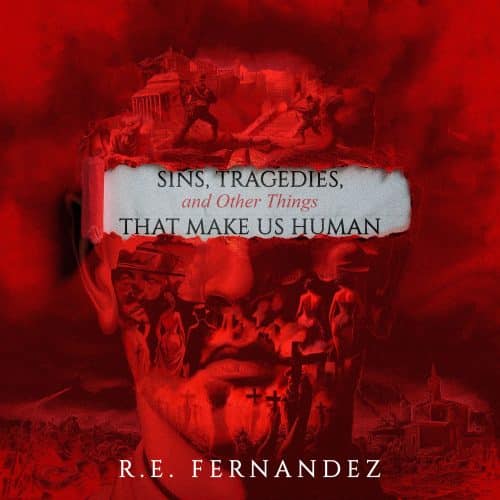 Sins, Tragedies, and Other Things That Make Us Human is a collection of five thought-provoking short stories that blend historical fiction, dark humor, and contemporary drama. Each tale holds a mirror to society, exposing the shadows we often choose to ignore. Unflinching and unsettling, this book is not for the faint of heart—but for those willing to confront the darker side of humankind.
 Healthy Home, Healthy Me: Creating Harmony From the Inside Out
 New Wine will cause you to embark on a soul-stirring journey as you dive into revelations of what happens when you are a recipient of God's outpouring of new wine. * Have you ever wondered if there's more to life? Felt that inner dryness that saps your spirit? It's time to uncork the New Wine of the Lord. Within these pages, you'll encounter a tapestry of narratives meticulously woven to awaken the dormant embers deep within your soul. * New wine will provoke you stir up an insatiable hunger for the extraordinary. Don't surrender to the mundane; embrace the promise of greater things ahead. * No matter your past, your trials, or the passage of years, know this: Your story is far from over. The Lord isn't finished with you yet. He will, at times, shake your very core to beckon you to a higher plane of spiritual awakening. * Just as He summoned the prophets to new horizons, He is calling you to venture beyond your comfort zone. When you return, you'll carry a fresh perspective, a blazing passion, and the taste of New Wine within your spirit. As you glide through these pages, prepare to be challenged, ignited and refreshed. Pick up your copy and begin your journey into new depths!
 Echoes from the Farm Tales from the best childhood ever!
 Selling Ethically: A Business Parable Connecting Integrity with Profits


