
-
 Leaving Dahomey is set in 1840 in the ancient West Afrikan Kingdom of Dahomey. Our story centers around the people in their everyday lives and occupations, the applique workers, the calabash makers, pottery makers, storytellers, makers of verse, the needleworkers/designers, the smiths, and the cultivators. The story follows a year in the life of a fifteen-year-old hammock-borne, Adeoha Adetoye, and her connection to a Vodun prophecy of a magical oracle that will appear in time.
 -
 What happens when you drop an agnostic Jewish surgeon in a century-old Catholic hospital, where the doctor meets dogma and falls for the CEO? A nun, for God’s sake. Dr. Martin Fischer, a white-coated Quixote, tilts his scalpel at the bloated underbelly of U.S. healthcare and fights for his patients. His only weapons are surgical skill and a pesky sense of righteous indignation that’s driving everyone nuts—including Marty. As he takes on a callous multi-billion-dollar medical corporation, a mercenary surgical group, and the thoroughly corrupt CFO of St. Salacious, an unplanned pregnancy threatens to excommunicate the entire hospital. Can they really do that? It’s either stress or God who intervenes. Did Jesus just wink at him from the cross?
 -
 Discover the surprising literary and poetic history of the RMS Titanic! Imagine getting the inside, behind the scenes story of the Titanic tragedy written by those who did not survive - but whose poetry and short accounts of the moments leading up to the Titanic sinking did. "If you love poetry, history, and feeling like Indiana Jones, read this book now." 5 Stars from Erin Nicole Cochran for Readers' Favorite The time has finally come to share the World Codex' revelations with the public at large. Codex SE is a concerted work of dedicated people who have worked tirelessly to bring this literary publication to the world stage. My connection to Titanic, through my great-grandfather's experience, has played an essential role as to who I am, cultivating an awareness of the importance of art as it inspires the better nature of humanity - through life's inevitable turmoil and even disaster. Discover unpublished poems and prose by historical figures including Albert Einstein, George Bernard Shaw, Edgar Allan Poe, Sylvia Barrett, Herman Holmes, Robert Wolcott, and many more.
 -
 Benno Neuburger, a modest land investor from Munich and Anna Einstein daughter of a cattle dealer from Laupheim, marry in 1907. They begin their lives together with great hope. It is a relatively prosperous time and a very optimistic one for German Jews who are enjoying a social renaissance in the industrializing, urbanizing rising star that is Germany. It’s not clear that this good fortune might begin to unravel. Even as news of an assassination in an “obscure” Balkan corner of the continent passes like a cold wind through Munich on a warm beer-garden July day, people shudder but feel no great alarm. Yet what follows is a war provoked by inter-colonialist competition. It is prolonged and bloody, giving way to German defeat, revolution, a brief socialist interlude in Munich, a merciless counter revolution, and the pitiless demagoguery of defeated generals. So marks the commencement of an era of nearly relentless distress and turmoil for Germany. The lives of Benno and Anna and their extended families are amid this swirl—trying to make a life as they struggle to survive, as they cling to the hope of a peaceful resolution to crisis. But to no avail. Munich becomes the epicenter of German fascism fed by nationalist resentment and racial madness – an offspring of European rivalries and colonialism. In the 1920s the brown shirts of Germany’s former African colonial army become the uniform of a domestic legion of terror. In the 1920s Benno, Anna and their children live as close neighbors to the demagogue who will become the Nazi leader. A slow-moving horror show envelops them in the years that follow. In the 1930s and 1940s: Emigrating children, a pogrom, a new war, evictions, “resettlement” via a train ride east . . . desperate acts of resistance, arrest, trial – as the holocaust plays out— all up close and personal: A human story told through the voices of those who lived it.
 -
 This book delves into the causes of Israel’s genocide against Palestinians, describes the crisis of war in eastern Europe (Ukraine and Russia), West Asia and East Asia, sorting truth from propaganda. It examines the role of the Big Lie in developing public consent and blunting popular opposition, and describes ways countries around the world as well as the general public are pressing for peace. Reviewer Andrea D writes in NetGalley that “Knight provides the historical context as well as sharp insight. The essays are succinct, pointed and very clear. This is a great supplement for any college class as well as a book to be discussed in community groups.” Danny Haiphong, Co-author of American Exceptionalism and American Innocence: A People’s History of Fake News says “Dee Knight has put together a critical analysis of U.S. foreign policy informed by years of experience in the peace movement and rigorous research into the inner workings of the empire. This book is a must read for anyone wanting to understand how the U.S. is pursuing war with Russia and China, and why it must be stopped.” Radhika Desai, Director, Geopolitical Economy Research Group; and Convenor, International Manifesto Group, says: “This book of excellent essays, many written in the heat of events and conveying their urgency, analyzes the current genocide on Palestine and U.S. drive for war, against Russia, China and beyond, in the longer historical perspective of the U.S. foreign policy as studied by its most important critics. Distilling long years in the peace movement, Knight exposes its roots and points to the only path to peace: opposition to the U.S. war machine.” Michael Wong, National Vice President of Veterans for Peace; Co-founder of Pivot To Peace, says: “Drawing on his lifetime of experience at the front lines of resistance to empire, Dee Knight details the multitude of struggles at home and abroad against the empire, and for building a new, multipolar world in which no single nation dominates, and all nations can live and thrive together. He shows we are now at a tipping point, when the old world of war and exploitation is ending, and a new world is coming into being."
 -
 Our recent storms didn't start in 2020 or 2016. They started decades ago in the 1960s - a whirlwind of threatened nuclear catastrophe, then police dogs and rednecks terrorizing civil rights marchers down south, then Vietnamese children fleeing from napalm flames. Then draft notices to go to Vietnam to "fight commies." A small town boy started by supporting rightist Goldwater against the "peace candidate" Johnson, but rapidly changed in the face of the civil rights and anti-war movements, and started a quest that hasn't ended yet.This book tells Dee Knight's story of "waking up" to the truth about the US war in Vietnam, then refusing the draft and going to Canada where he lived for six years. It relates the years-long campaign for amnesty, in which Knight was a leader. After war resisters won a partial amnesty, Knight continued campaigning against US wars up to the present day. A reviewer adds: Like many others who became politicized during the US war on the Vietnamese, Knight continued his political work after the war finally ended in 1975. In addition to his work for complete and total amnesty, Knight became involved in various anti-imperialist work, from Nicaragua to Iran. In fact, he spent several months in Nicaragua as a member of the organization TecNica. This organization was involved in numerous locally-based water filtration and electricity production projects and was made up of many international volunteers hoping to help out the Sandinista revolutionary government. During this time, the government was also fighting a war against US-funded mercenaries known for their brutal and bloody killings of civilians. In a chapter titled “A Love Song to Nicaragua,” Knight describes his work and the nature of a nation in the early years of a revolutionary government. The subsequent chapters in this text tell the story of Knight’s continued political involvement and is hopes for a better world. Each chapter ends with a reflection on the meaning of the events in the chapter and their role in the larger picture of social change with the goal of a socialist world as its outcome. In addition, My Whirlwind Lives includes a number of appendices: documents from the draft resistance movement, the amnesty campaign and a reflection on the Green New Deal, among others. This is a personal testimony from a human who has dedicated his life to a more just world. The narrative is conversational and thoughtful. --Reviewer: Ron Jacobs
 -
 Human Justice is the true story of a human rights lawyer’s last trial in a 15-year career spent helping humans living on the margins enforce civil rights and anti-discrimination laws. Corporate values, which are only about money and nothing else, played out to their logical extreme in the trial, signaling that corporatism is incompatible with a sustainable future for our species and our planet. The harmonic divide reverberating in our society is less about blue values versus red values and more about human values versus corporate values—and the corporate side is winning. Human values must always trump corporate values.
 -
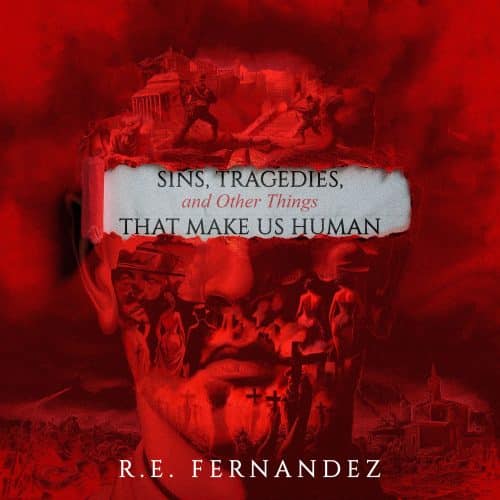 Sins, Tragedies, and Other Things That Make Us Human is a collection of five thought-provoking short stories that blend historical fiction, dark humor, and contemporary drama. Each tale holds a mirror to society, exposing the shadows we often choose to ignore. Unflinching and unsettling, this book is not for the faint of heart—but for those willing to confront the darker side of humankind.
 -
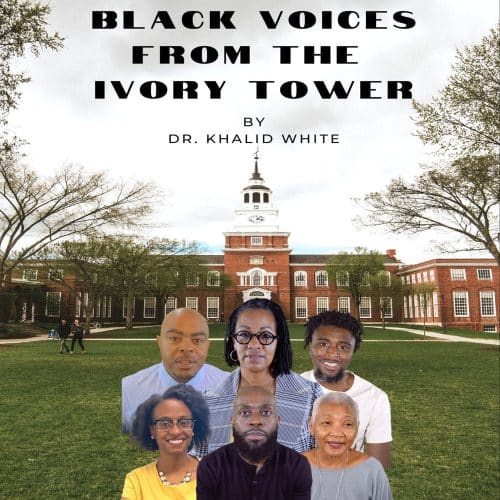 Centering the invaluable experience and expertise that Black scholar-practitioners possess in advancing equity, inclusion, belonging, and transformative, systemic change. The Black Voices provide steps, suggestions, and solutions to move your institution from anti-Black towards anti-racist. These are the Black Voices From the Ivory Tower. This book is a great resource in supporting: Student success Anti-racism work Ethnic Studies Critical Race Theory Educators, Classified Professionals, Administrators Allies, accomplices, contributors Addressing workplace issues and challenges Professional development Diversity, equity, inclusion goals Closing equity gaps Cultural affinity groups Solutions-oriented leadership Human Resources employees Equal Employment Opportunities employees Employee on-boarding Leaders in development Disrupting the system Corporate workplace climate and culture And so much more!
 -
 In Jaxon and Kevin’s Black History Trip Downtown, the second book in this educational book series, Jaxon shares his magical adventure with his cousin Kevin. They venture into town to meet Black inventors and scientists who are responsible for many of the things we encounter every day.
 -
 Echoes from the Farm Tales from the best childhood ever!
 -

New Orleans native Mademoiselle Francesca Dumas is a kept woman. At age eighteen in the second year of the American Civil War, she is the concubine of a rich New Orleans banker, Joachim Buisson. Born a quadroon, Francesca leads a sheltered life of elegant jewels, gowns, lace, and lavish balls—until a bullet shatters her dream world.
An assassin murders “her man” as Francesca stood beside him among a throng gathered atop a Mississippi River levee on April 25, 1862. Bowed by Joachim’s body, rain-soaked and blood-spattered, she vows revenge. Francesca’s passionate desire for retribution drives her into a new life as a sleuth.


