What My Hand Say, on one hand is a bold unapologetic tribute of black people living their lives in South Carolina. While on other hand, it is a palpable reckoning with the state’s weighted
history.
At a time when violence in America and Europe dominates the daily news, a groundbreaking new book co-authored by James Gilligan, an eminent psychiatrist who has worked with criminals, and David A.J. Richards, a legal scholar of toxic patriarchy, illuminates the ways in which Shakespeare offers unique insights into the causes of violence as well as its prevention.
Now a riveting new audio production, Holding a Mirror Up to Nature: Shame, Guilt, and Violence in Shakespeare takes advantage of scenes performed by acclaimed actors to dramatize how much Shakespeare’s tragic heroes exhibit the psychology of those who commit violence in the contemporary world.
The voice of British-American actor John Douglas Thompson called “perhaps the greatest Shakespeare interpreter in contemporary theater,” together with women’s parts spoken by Shakespeare & Company’s distinguished Tod Randolph, and narration by award-winning theater star Nigel Gore, orchestrate this tour de force audiobook that belongs in the listening library of everyone who loves Shakespeare and is curious about what causes and what prevents violence.
Discover the surprising literary and poetic history of the RMS Titanic!
Imagine getting the inside, behind the scenes story of the Titanic tragedy written by those who did not survive - but whose poetry and short accounts of the moments leading up to the Titanic sinking did.
"If you love poetry, history, and feeling like Indiana Jones, read this book now." 5 Stars from Erin Nicole Cochran for Readers' Favorite
The time has finally come to share the World Codex' revelations with the public at large. Codex SE is a concerted work of dedicated people who have worked tirelessly to bring this literary publication to the world stage. My connection to Titanic, through my great-grandfather's experience, has played an essential role as to who I am, cultivating an awareness of the importance of art as it inspires the better nature of humanity - through life's inevitable turmoil and even disaster.
Discover unpublished poems and prose by historical figures including Albert Einstein, George Bernard Shaw, Edgar Allan Poe, Sylvia Barrett, Herman Holmes, Robert Wolcott, and many more.
Before a moment becomes a memory, hold it close. "Moments To Hold Close" is Molly Burford’s first poetry collection. Burford’s words encapsulate and express all facets of the human condition, including how to love and live a full life embracing the moments that matter.
If you are hurting, healing, feeling, letting someone go, or starting a new chapter and learning to open your heart back up again, this book was meant to find you when you needed it most. "This Was Meant To Find You (When You Needed It Most)" is Charlotte Freeman’s second book and was written to resonate deeply with the ones who seek comfort in reading the right words at the right time. It’s for the ones who are learning what it means to choose yourself a little more each day and be gentle with yourself through all phases of your journey.
Amy O'Hanlon's excellent Sister Butterfly illustrations show Carla approaching a favorite corner of her garden where she feels safe and happy. Her vigilant brother knows that Carla can create beautiful fantasies as she twirls around and round to music only she can hear, engaged in quiet conversation with the small creatures such as butterflies and her favorite flowers.
Mike Mirabella's children's book entitled Sister Butterfly, is a beautifully illustrated children's book based on a song from his 1998 CD entitled, Special People.
Mike wrote Sister Butterfly song years ago for his daughter, Carla, when she was three years old. The theme of Sister Butterfly centers on Mike's abiding love for his daughter with Down syndrome and for self-discovery and the transformation of the hearts that surround her.
Mike wrote in the song; "My sister is a butterfly who never learned to fly, ...”. Carla still wasn't walking or talking and Mike thought at the time, she would have little chance of accomplishing much of anything in her life. "How wrong I was; her life was a parade of accomplishments!” - Papa Mike.
Does your child ever sit by themselves—alone and seemingly friendless?
In I Used to Be Shy, meet Carla, our self-appointed social committee of one, who makes everyone at summer camp feel welcome. Carla spots a shy new boy who hides from others in his cabin, closing his curtain. Carla follows her heart and gathers a small group of fellow campers to coax him out to play games. With Carla’s encouragement, our new camper builds up his self-confidence, loses his fear, and learns to enjoy his new friends.
The bonus song "Little Brown Pony" includes the lyrics and music notations as does "I Used to Be Shy."
Dr. Emmaline Cartwright is about to retire as a professor of history from an Eastern Ontario University. Though she’s led a successful career, she lingers in regret with an unfulfilled dream she’s held for herself for many years. Her sense of restlessness feels like an inner wound.
Emmaline’s yearnings are unexpectedly fulfilled when she discovers pages of a book written by Kate Robinson, a Loyalist woman from the eighteenth century. Within these pages, Kate tells of leaving America after the revolution to travel to a country that would eventually become Canada. Her love of both writing and her children sustains her when a betrayal causes her to journey back to the land she’d left behind.
Kate’s story becomes Emmaline’s obsession—and ultimately, her way forward. Each woman forges her own respective path, facing barriers and misfortunes. Though Emmaline and Kate occupy different eras, their stories are colored by similar hopes, fears, dreams, and tenacity.
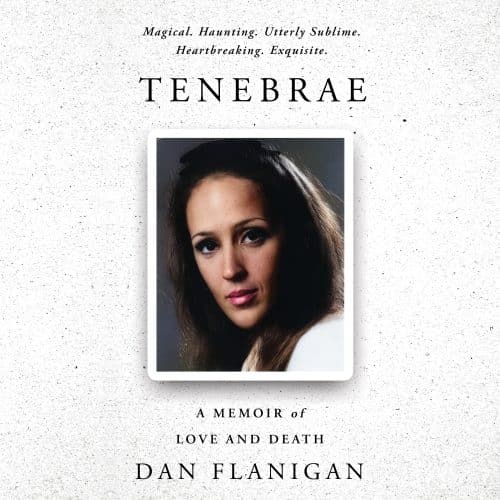
Tenebrae is the ancient Latin word for darkness—the gradual extinguishment of light, one candle flame at a time.
In this memoir told in poems, Dan Flanigan follows that gradual dimming through the last illness and death of his wife. Written in free verse and prose poems, Tenebrae moves across the full arc of a long marriage. These poems refuse the familiar consolations. There is no posturing, no preciousness, no self-pity. A dying woman is rendered as fully human—strong, flawed, dignified, unmistakably herself—and the speaker does not cast himself as hero.
Other poems in the book reflect this same grappling with the fundamental issues of our lives—loss, hope, despair and acceptance, reflecting a compassionate embrace of the human condition.
If you think you don’t like poetry, Tenebrae may change your mind.
These are truly poems for the people—plain but exquisitely crafted and expressed in a language that is both elegant and easy to understand… They reach from the heart to the heart.

 What My Hand Say, on one hand is a bold unapologetic tribute of black people living their lives in South Carolina. While on other hand, it is a palpable reckoning with the state’s weighted history.
 At a time when violence in America and Europe dominates the daily news, a groundbreaking new book co-authored by James Gilligan, an eminent psychiatrist who has worked with criminals, and David A.J. Richards, a legal scholar of toxic patriarchy, illuminates the ways in which Shakespeare offers unique insights into the causes of violence as well as its prevention. Now a riveting new audio production, Holding a Mirror Up to Nature: Shame, Guilt, and Violence in Shakespeare takes advantage of scenes performed by acclaimed actors to dramatize how much Shakespeare’s tragic heroes exhibit the psychology of those who commit violence in the contemporary world. The voice of British-American actor John Douglas Thompson called “perhaps the greatest Shakespeare interpreter in contemporary theater,” together with women’s parts spoken by Shakespeare & Company’s distinguished Tod Randolph, and narration by award-winning theater star Nigel Gore, orchestrate this tour de force audiobook that belongs in the listening library of everyone who loves Shakespeare and is curious about what causes and what prevents violence.
 Discover the surprising literary and poetic history of the RMS Titanic! Imagine getting the inside, behind the scenes story of the Titanic tragedy written by those who did not survive - but whose poetry and short accounts of the moments leading up to the Titanic sinking did. "If you love poetry, history, and feeling like Indiana Jones, read this book now." 5 Stars from Erin Nicole Cochran for Readers' Favorite The time has finally come to share the World Codex' revelations with the public at large. Codex SE is a concerted work of dedicated people who have worked tirelessly to bring this literary publication to the world stage. My connection to Titanic, through my great-grandfather's experience, has played an essential role as to who I am, cultivating an awareness of the importance of art as it inspires the better nature of humanity - through life's inevitable turmoil and even disaster. Discover unpublished poems and prose by historical figures including Albert Einstein, George Bernard Shaw, Edgar Allan Poe, Sylvia Barrett, Herman Holmes, Robert Wolcott, and many more.
 Before a moment becomes a memory, hold it close. "Moments To Hold Close" is Molly Burford’s first poetry collection. Burford’s words encapsulate and express all facets of the human condition, including how to love and live a full life embracing the moments that matter.
 If you are hurting, healing, feeling, letting someone go, or starting a new chapter and learning to open your heart back up again, this book was meant to find you when you needed it most. "This Was Meant To Find You (When You Needed It Most)" is Charlotte Freeman’s second book and was written to resonate deeply with the ones who seek comfort in reading the right words at the right time. It’s for the ones who are learning what it means to choose yourself a little more each day and be gentle with yourself through all phases of your journey.
 Amy O'Hanlon's excellent Sister Butterfly illustrations show Carla approaching a favorite corner of her garden where she feels safe and happy. Her vigilant brother knows that Carla can create beautiful fantasies as she twirls around and round to music only she can hear, engaged in quiet conversation with the small creatures such as butterflies and her favorite flowers. Mike Mirabella's children's book entitled Sister Butterfly, is a beautifully illustrated children's book based on a song from his 1998 CD entitled, Special People. Mike wrote Sister Butterfly song years ago for his daughter, Carla, when she was three years old. The theme of Sister Butterfly centers on Mike's abiding love for his daughter with Down syndrome and for self-discovery and the transformation of the hearts that surround her. Mike wrote in the song; "My sister is a butterfly who never learned to fly, ...”. Carla still wasn't walking or talking and Mike thought at the time, she would have little chance of accomplishing much of anything in her life. "How wrong I was; her life was a parade of accomplishments!” - Papa Mike.
 Does your child ever sit by themselves—alone and seemingly friendless? In I Used to Be Shy, meet Carla, our self-appointed social committee of one, who makes everyone at summer camp feel welcome. Carla spots a shy new boy who hides from others in his cabin, closing his curtain. Carla follows her heart and gathers a small group of fellow campers to coax him out to play games. With Carla’s encouragement, our new camper builds up his self-confidence, loses his fear, and learns to enjoy his new friends. The bonus song "Little Brown Pony" includes the lyrics and music notations as does "I Used to Be Shy."
 Dr. Emmaline Cartwright is about to retire as a professor of history from an Eastern Ontario University. Though she’s led a successful career, she lingers in regret with an unfulfilled dream she’s held for herself for many years. Her sense of restlessness feels like an inner wound. Emmaline’s yearnings are unexpectedly fulfilled when she discovers pages of a book written by Kate Robinson, a Loyalist woman from the eighteenth century. Within these pages, Kate tells of leaving America after the revolution to travel to a country that would eventually become Canada. Her love of both writing and her children sustains her when a betrayal causes her to journey back to the land she’d left behind. Kate’s story becomes Emmaline’s obsession—and ultimately, her way forward. Each woman forges her own respective path, facing barriers and misfortunes. Though Emmaline and Kate occupy different eras, their stories are colored by similar hopes, fears, dreams, and tenacity.
 Tenebrae is the ancient Latin word for darkness—the gradual extinguishment of light, one candle flame at a time. In this memoir told in poems, Dan Flanigan follows that gradual dimming through the last illness and death of his wife. Written in free verse and prose poems, Tenebrae moves across the full arc of a long marriage. These poems refuse the familiar consolations. There is no posturing, no preciousness, no self-pity. A dying woman is rendered as fully human—strong, flawed, dignified, unmistakably herself—and the speaker does not cast himself as hero. Other poems in the book reflect this same grappling with the fundamental issues of our lives—loss, hope, despair and acceptance, reflecting a compassionate embrace of the human condition. If you think you don’t like poetry, Tenebrae may change your mind. These are truly poems for the people—plain but exquisitely crafted and expressed in a language that is both elegant and easy to understand… They reach from the heart to the heart.


